International diplomacy stage

International Advocacy

From Fieldwork and Cultural Memory to Global Policy Spaces

LILMOD's international advocacy work is rooted in years of research, fieldwork, public history, cultural preservation, and youth peacebuilding. The team's presence in United Nations and international nuclear disarmament spaces did not begin as symbolic access. It emerged from sustained work through Morehouse Movement, Memory and Justice, Johns Island Preservation Field School, Gullah-Geechee research, PEAC Institute, Students for Nuclear Disarmament, Back from the Brink, and community-centered advocacy.
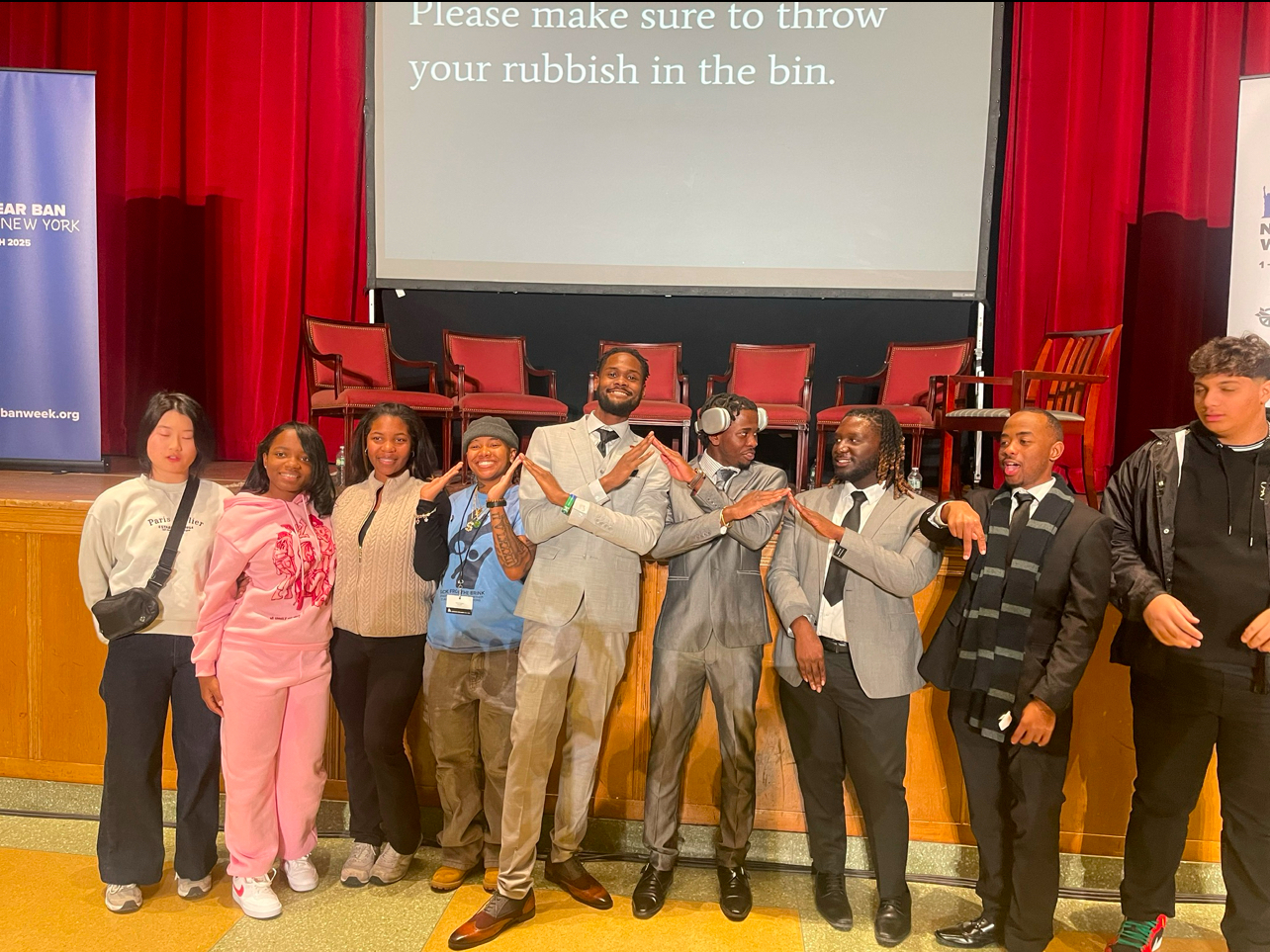
2026 International Youth Statement

The 2026 International Youth Statement at the Nuclear Non-Proliferation Treaty Review Conference was co-delivered by LILMOD team member Jahrik Browner and Rooj Ali. Jahrik also served as a primary liaison between the PEAC Youth Delegation and the Nuclear Age Peace Foundation / Reverse the Trend, with Clarence Sanders contributing to writing and editing and James D. Height Jr. advising the PEAC Youth Delegation on structure and justice-centered framing.

The 2026 International Youth Statement at the Nuclear Non-Proliferation Treaty Review Conference was co-delivered by LILMOD team member Jahrik Browner and Rooj Ali, with significant liaison, editing, and refinement work from Jahrik, writing and editing contributions from Clarence Sanders, and structural advisory support from James D. Height Jr. through the PEAC Youth Delegation.

This Work Did Not Begin at the United Nations

LILMOD's international advocacy model is grounded in the belief that young leaders should not be placed into global spaces without preparation, context, or purpose.

The team's international work was built through years of field research, public history, cultural documentation, nuclear disarmament advocacy, and community-centered learning.

Before the 2026 NPT Review Conference, members of the LILMOD team had already contributed to the Morehouse Movement, Memory and Justice Project, Johns Island Preservation Field School, Gullah-Geechee cultural preservation work, PEAC Institute programming, Students for Nuclear Disarmament, Back from the Brink, and international youth peacebuilding efforts. These experiences shaped the team's ability to enter global policy spaces with substance, history, and public purpose.

2026 NPT Review Conference and PEAC Youth Delegation

LILMOD's international advocacy record includes public-facing work across cultural diplomacy, youth delegation participation, peacebuilding, public communication, and international program support. These highlights show how LILMOD team members have translated fieldwork, research, cultural memory, and youth leadership into real civic and global opportunities.

In 2026, LILMOD team members participated in the PEAC Youth Delegation connected to the Nuclear Non-Proliferation Treaty Review Conference in New York. Jahrik Browner, representing PEAC Institute, co-delivered the International Youth Statement alongside Rooj Ali. Beyond delivering the statement, Jahrik served as a primary liaison between the PEAC Youth Delegation and the Nuclear Age Peace Foundation / Reverse the Trend, helping coordinate communication and playing a central role in editing and refining the statement.

Clarence Sanders participated in the PEAC Youth Delegation and helped write and edit the statement. James D. Height Jr. advised the delegation on structure, historical framing, and justice-centered narrative development, helping connect the statement to Gullah-Geechee history, affected communities, nuclear legacies, uranium extraction, the Savannah River Site, hibakusha testimony, and global civic responsibility.

This section honors the labor accurately: Jahrik, Clarence, and the delegation members carried the heaviest writing and editing work, while James contributed advisory support on structure and framing.

Cultural Diplomacy & Hip-Hop for Nuclear Disarmament

LILMOD's international advocacy work also includes cultural diplomacy through music, storytelling, and public performance.

In 2025, James D. Height Jr., performing as Blackout Taedoe, became the first documented rapper to perform at a global disarmament meeting during the Treaty on the Prohibition of Nuclear Weapons gathering at the United Nations. Morehouse College publicly recognized this milestone, noting that he represented PEAC Institute, Students for Nuclear Disarmament, and the Back from the Brink campaign.

This milestone is framed as cultural diplomacy, not entertainment. It shows how LILMOD's model treats art, memory, youth voice, and public communication as serious tools for peace education and global civic engagement.

Global Pause for Peace & PEAC Fellowship

LILMOD's international advocacy record also includes direct program support for PEAC Institute's Global Pause for Peace / 24 Hours for Peace initiative.

As PEAC Fellows, James D. Height Jr. and Jahrik Browner helped support a global peace activation rooted in music, art, youth voice, cultural expression, and cross-cultural engagement.

James D. Height Jr. served as Pause for Peace Outreach & Recruitment Coordinator and MC for the South Carolina segment, connecting public performance, youth engagement, Gullah-Geechee cultural presence, and peace-centered programming. Jahrik Browner served as Global Peace Initiative Coordinator, supporting international logistics, cross-cultural participant coordination, technical infrastructure, content development, and partnership-building across multiple time zones and six continents.

This work demonstrates that LILMOD's team has experience not only in advocacy and public speaking, but also in building, coordinating, and supporting international civic programming.

Why This Matters for Institutions

These milestones are not listed for congratulations alone. They demonstrate why schools, universities, nonprofits, public agencies, cultural institutions, and civic partners should work with LILMOD.

  1. Prepare young leaders for civic, cultural, and international opportunities.
  2. Translate field research into public education and leadership development.
  3. Build youth delegation readiness programs rooted in history, ethics, and public purpose.
  4. Use cultural memory, media, music, and storytelling as serious tools for civic learning.
  5. Connect local communities to national and international systems without losing historical grounding.
  6. Develop programs that turn exposure into measurable readiness, confidence, and institutional navigation skills.

From Fieldwork to Global Advocacy

The timeline shows preparation before international policy access.

2023-2025 - Morehouse Movement, Memory and Justice

James D. Height Jr. and Jahrik Browner participated in Morehouse Movement, Memory and Justice work that connected Africana history, cultural memory, digital humanities, justice, and public-facing scholarship.

2024 - Johns Island Preservation Field School

James D. Height Jr. completed field-based Gullah-Geechee preservation research through the Johns Island Preservation Field School, strengthening LILMOD's public history and cultural memory foundation.

2025 - TPNW Cultural Diplomacy

James D. Height Jr., performing as Blackout Taedoe, became the first documented rapper to perform at a global nuclear disarmament meeting during the TPNW gathering at the United Nations.

2025 - Global Pause for Peace

James D. Height Jr. and Jahrik Browner served as PEAC Fellows supporting Global Pause for Peace / 24 Hours for Peace, contributing to outreach, recruitment, event hosting, international logistics, technical coordination, and global peace programming.

2026 - NPT PEAC Youth Delegation

Jahrik Browner co-delivered the International Youth Statement with Rooj Ali and served as a primary liaison with the Nuclear Age Peace Foundation / Reverse the Trend while helping edit and refine the statement. Clarence Sanders helped write and edit the statement and participated in the PEAC Youth Delegation. James D. Height Jr. advised the delegation on structure and justice-centered framing.

Public Documentation

External records organized by statement documentation, cultural diplomacy, program execution, and public reflection.

2026 NPT Youth Statement

Reverse the Trend - International Youth Statement at the 2026 NPT Review Conference

Public record of the 2026 International Youth Statement, delivered by Jahrik Browner and Rooj Ali, with PEAC Institute Pause for Peace listed among endorsers.

Nuclear Age Peace Foundation / Waging Peace - International Youth Statement

Nuclear Age Peace Foundation publication of the 2026 International Youth Statement at the NPT Review Conference in New York, delivered by Jahrik Browner and Rooj Ali.

2025 TPNW Cultural Diplomacy

Morehouse College News - James Height Jr. '25: Bridging Movements, Making History

Official Morehouse College feature documenting James D. Height Jr.'s 2025 TPNW participation, his representation of PEAC Institute, Students for Nuclear Disarmament, and Back from the Brink, and his recognition as the first documented rapper to perform at a global disarmament meeting.

NHK World Japan - Rapper Urges Nuclear-Free World: Passing the Torch of Peace

International media feature documenting James D. Height Jr.'s nuclear disarmament advocacy, artistic work, and peace-centered public message.

PEAC Fellowship and Global Peace Programming

PEAC Institute - Pause for Peace

Public PEAC Institute page for Pause for Peace, a global peace activation tied to music, art, culture, youth voice, and International Day of Peace programming.

Public Reflections and Delegation Framing

James D. Height Jr. LinkedIn - 2026 NPT / United Nations / Nuclear Disarmament

Public documentation of James D. Height Jr.'s role and reflections connected to the 2026 NPT, United Nations engagement, PEAC Institute delegation work, and nuclear disarmament.

James D. Height Jr. LinkedIn - Gullah-Geechee / Hibakusha / United Nations

Public reflection connecting Gullah-Geechee memory, Hibakusha testimony, nuclear justice, and global civic responsibility.

Global experiences become curriculum systems.

LILMOD does not treat international exposure as symbolic travel.

The organization converts real global experiences into teachable systems: preparation modules, leadership simulations, youth delegation readiness, public communication training, cultural memory frameworks, and institutional confidence-building. This allows participants to understand not only what international institutions are, but how to responsibly enter, interpret, and contribute to them.